My posts
Random thoughts on AI and metadata
Mar 1, 2026
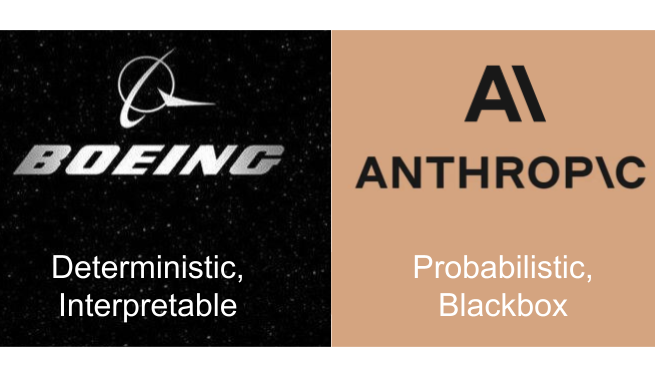
AI that makes life or death decisions should be interpretable
Last year, Boeing 787 crashed into a medical college in India killing 260 people. Investigators blame the pilots. The pilots' families blame Boeing and the final report has not been released. Meanwhile, US Department of War wants to use Anthropic’s AI model in fully autonomous weapons without human approval. Anthropic refused it, because their model is unreliable.AI systems of today are nowhere near reliable enough to make fully autonomous weapons. Anyone who's worked with AI models understands that there's a basic unpredictability to them that in a purely technical way we have not solved. — D
Jan 7, 2026
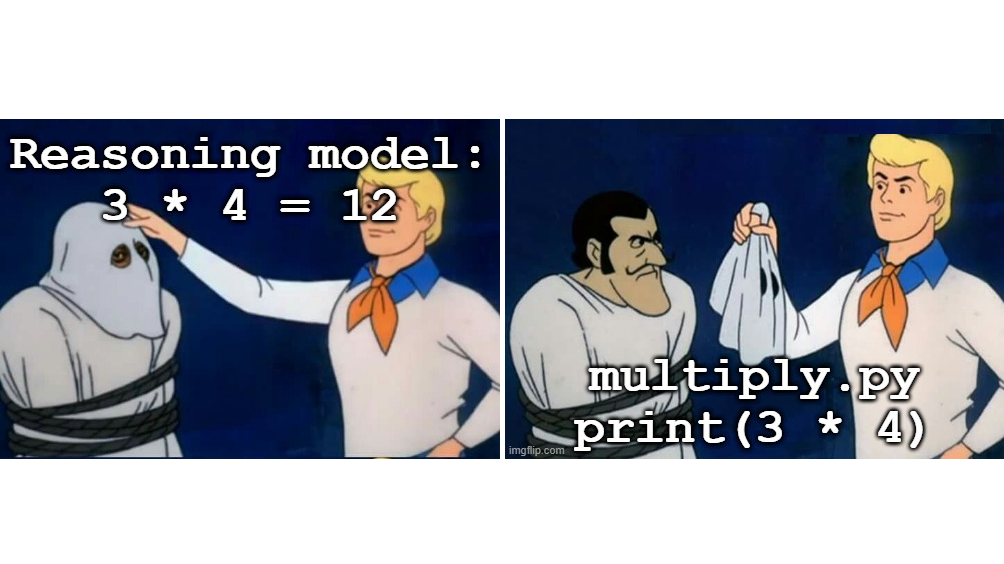
Let AI Speak in Its Mother Tongue
Two years ago, Mark Zuckerberg revealed that teaching Meta's Llama model with code significantly improved its reasoning ability. It enabled smaller models like Llama 3 to outperform larger models like Llama 2. The industry took notice and every leading AI lab began teaching models to code. This essay explores why learning code helps models reason.In the second part, we'll explore how models went from learning code to generating code as a reasoning tool. While doing so, they continue using the transformer architecture built for natural language leading to accuracy loss.In the third part, I prop
Dec 14, 2025
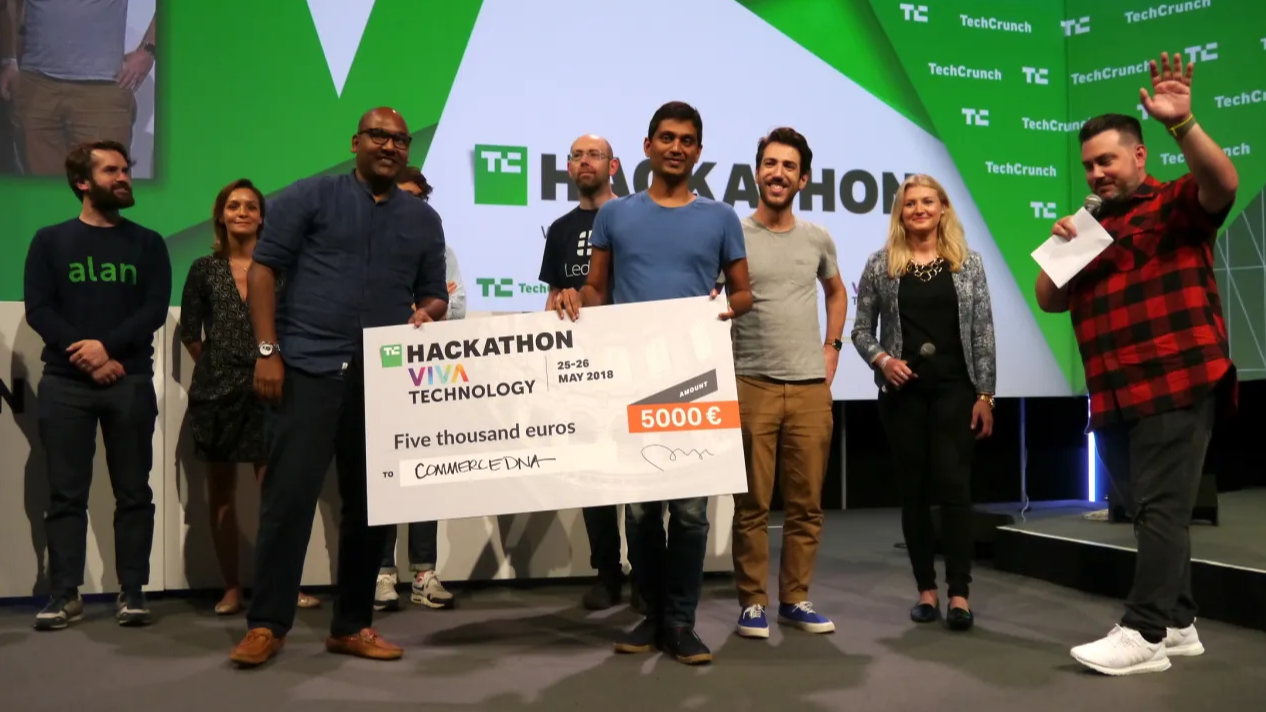
Is Your Startup Failure Your War or Shame?
My co-founder and I had just moved to France and everything fell apart. Our recommendation engine for ecommerce had signed up fast-growing startups across India and Southeast Asia. Most of them were funded by Rocket Internet. We thought moving to Europe would help us land more of their portfolio companies. We even signed POCs with Galeries Lafayette and Veepee.Then GDPR hit. Overnight, handling customer data became too risky, and every European client pulled out. Meanwhile, the ecommerce bubble burst in Asia. Each month brought news of another customer sold to Alibaba, their IT infrastructure
Nov 3, 2025
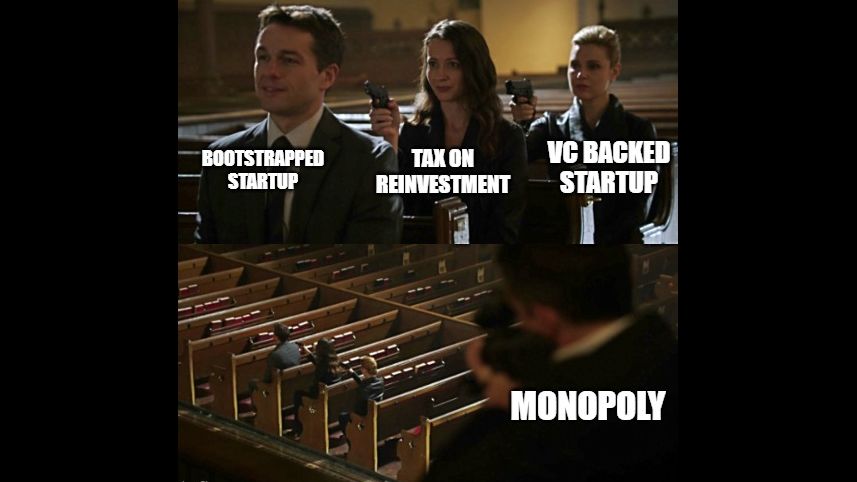
The Hidden Tax Penalty Killing Bootstrapped Startups
Three years ago, when we started making profit as a bootstrapped startup, I was stunned by how little money I could reinvest in my own company compared to a funded competitor. We paid ourselves 20% of the profit and paid 40% in taxes and reinvested the rest i.e. 40% into our business. Meanwhile, a VC-backed competitor could show losses and invest 100% of the revenue plus the $10 million or $50 million they raised from investors. In this essay, I'll show you how screwed up the incentives are for bootstrapped companies and what we can do to fix this.Real numbers from my startupLet me s
Oct 31, 2025
From Lossy to Lossless Reasoning
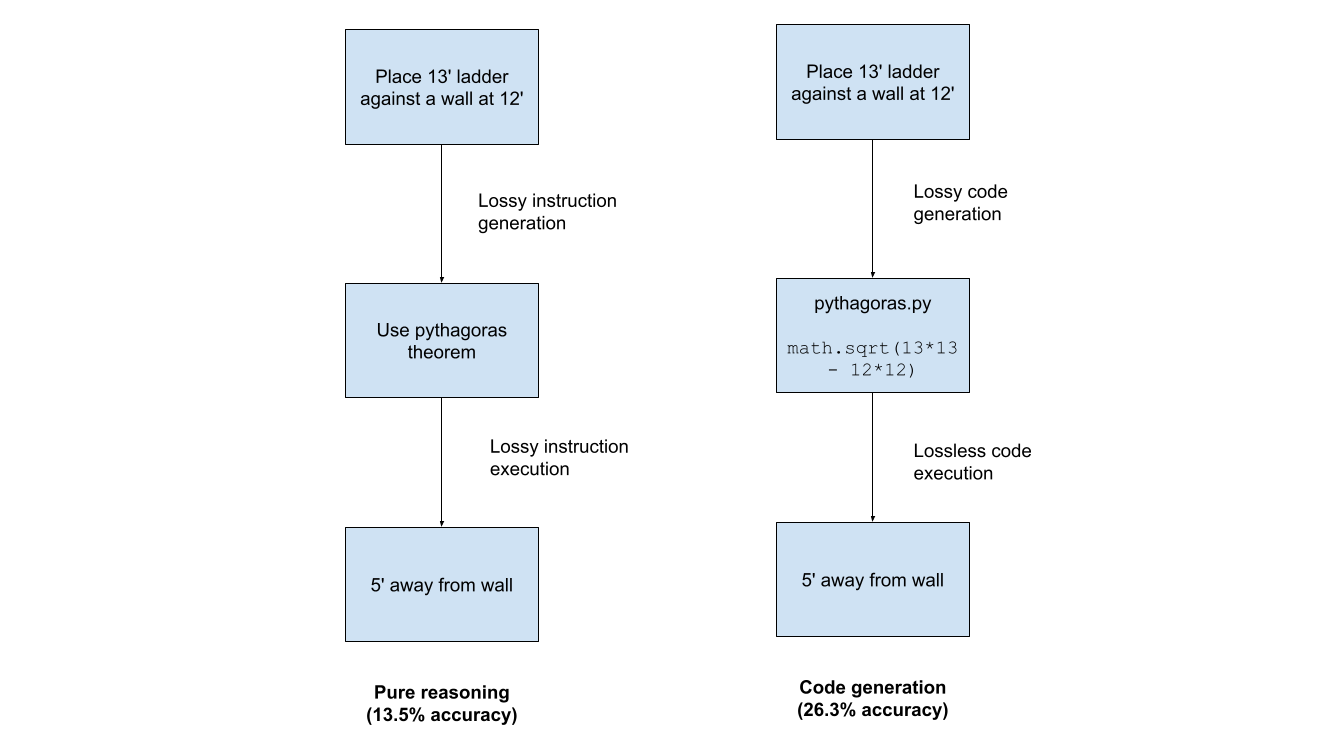
In my last post, I argued that code generation is not only used by AI coding tools like Cursor. It is the kingpin behind reasoning and all that is built on top of it (from agentic AI to AGI itself). For example, if you ask AI how to position a 13-foot ladder to reach exactly 12 feet up a wall, a reasoning model like GPT-5 uses the pythagorean theorem to calculate the answer: 5 feet from the wall. There are two ways it can do this:Code generation mode (Tool use): Generate math.sqrt(13*13 - 12*12) and use Python as a tool to run it and return 5.Pure reasoning mode (No tool use): If you ask GPT-5
Oct 23, 2025
Reasoning Is Not Model Improvement
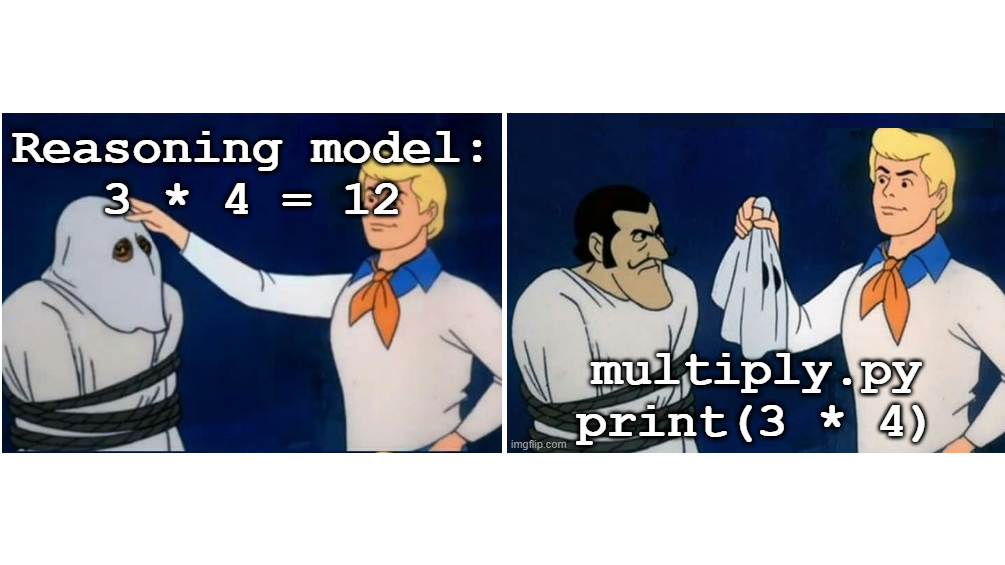
How tool use became a substitute for solving hard problemsWhen OpenAI released o1 in April 2024 and called it a "reasoning model," the industry celebrated a breakthrough. Finally, AI that could think step-by-step, solve complex problems, handle graduate-level mathematics.But look closer at what's actually happening under the hood. When you ask the latest model, ChatGPT-5 to multiply two large numbers, it doesn't calculate. It generates Python code, executes it in a sandbox, and returns the result. Unlike ChatGPT-3, which at least attempted arithmetic internally (and often failed), ChatGPT-5 de